

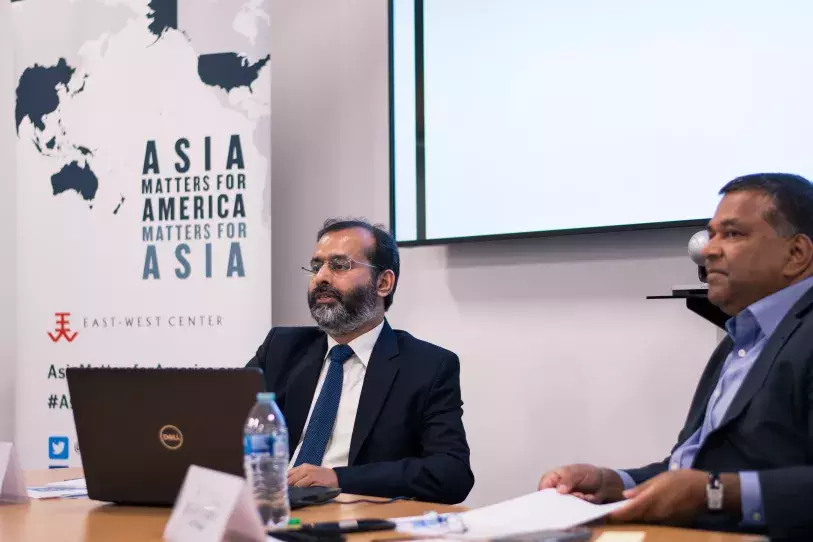
June 14, 2022 Event: European-DPRK Track II Engagement: Facilitating Dialogue and Diplomacy
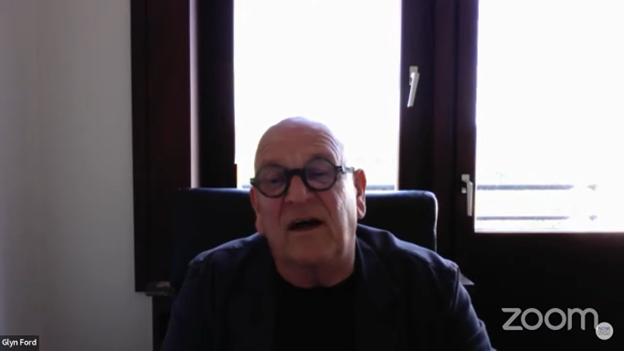
The East-West Center in Washington, in partnership with the National Committee on North Korea (NCNK), held the second webinar in a series of webinars on North Korea's relations with European nations with Track2Asia's Mr. Glyn Ford. Read more...
May 25, 2022 Event: Balancing Diplomatic Priorities Across Multiple Interests: North Korea and Europe Relations
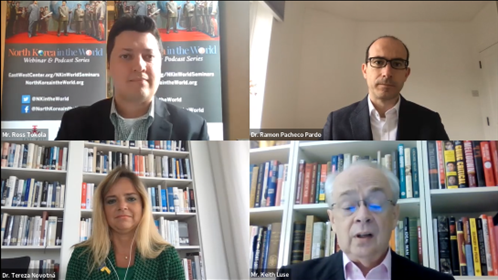
The East-West Center in Washington, in partnership with the National Committee on North Korea (NCNK), held the first in a forthcoming series of webinars on North Korea's relations with European nations with Vrije Universiteit Brussel's Dr. Ramon Pacheco Pardo and EUROPEUM's Dr. Tereza Novotná. Read more...
May 24, 2022 Event: Implications of the Planned Ending of Some US Assistance Provided Under the Compacts of Free Association
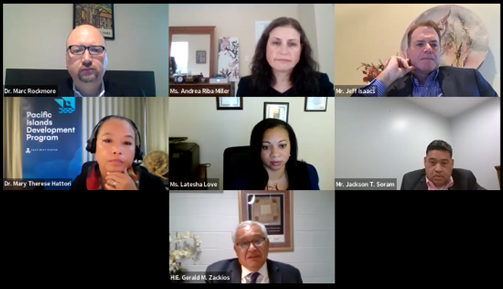
The East-West Center in Washington, in partnership with the East-West Center's Pacific Islands Development Program (PIDP), held a discussion with members of the Government Accountability Office (GAO) and government officials from the Republic of the Marshall Islands and Federated States of Micronesia on US assistance under the Compacts of Free Association (COFA), the findings of GAO's report on the matter, and the implications as the Compacts near the time of renewal. Read more...
May 18, 2022 Event: Assessing US-ASEAN Relations: The 2022 Special Summit and Beyond
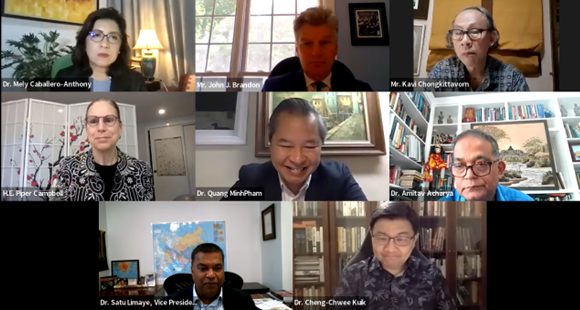
The East-West Center in Washington, in partnership with American University's ASEAN Studies Initiative, held a discussion with US and Southeast Asian experts on the opportunities and work still to be done following the US-ASEAN Special Summit in mid-May 2022. Read more...
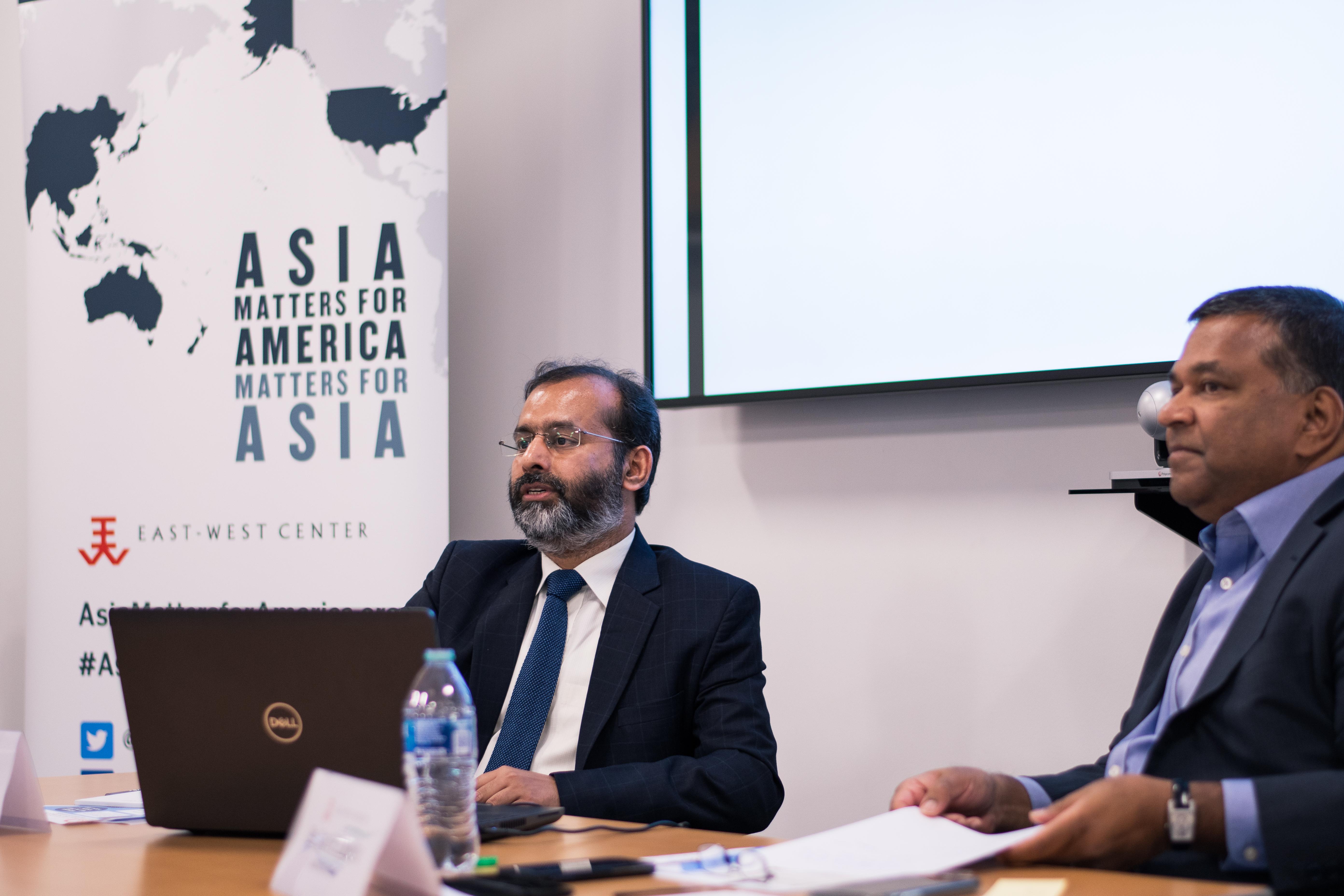
The East-West Center in Washington held a discussion with the Stockholm Centre for South Asian and Indo-Pacific Affairs' Dr. Jagannath Panda on what stronger Sino-Russian relations mean for India’s foreign policy, including against the backdrop of the war in Ukraine. Read more...
April 11, 2022 Event: America: A Singapore Perspective
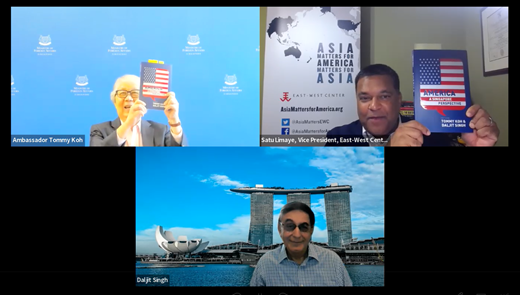
The East-West Center in Washington held a discussion with Singapore's Ministry of Foreign Affairs' Ambassador Tommy Koh and the ISEAS-Yusof Ishak Institute's Mr. Daljit Singh on the status of the US-Singapore relationship and how it navigates geopolitical tensions in the region in their latest edited volume. Read more...
March 16, 2022 Event: US Commitment to Southeast Asia in the Indo-Pacific Shadow: Outlook Under Biden and Beyond
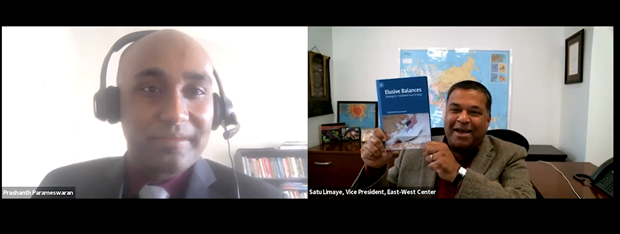
The East-West Center in Washington held a discussion with The Diplomat's Prashanth Parameswaran on how he sees US-Southeast Asia relations under the Biden administration based on the findings from his latest book. Read more...
March 14, 2022 Event: The Street and the Ballot Box: The Bersih Movement, 2018 Election, and the Implications for Malaysian Politics
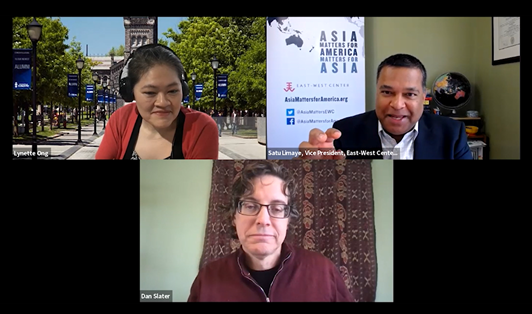
The East-West Center in Washington held a discussion with the University of Toronto's Dr. Lynette Ong and the University of Michigan's Dr. Dan Slater on topics from Dr. Ong's latest book concerning the evolution of Malaysia's domestic politics. Read more...
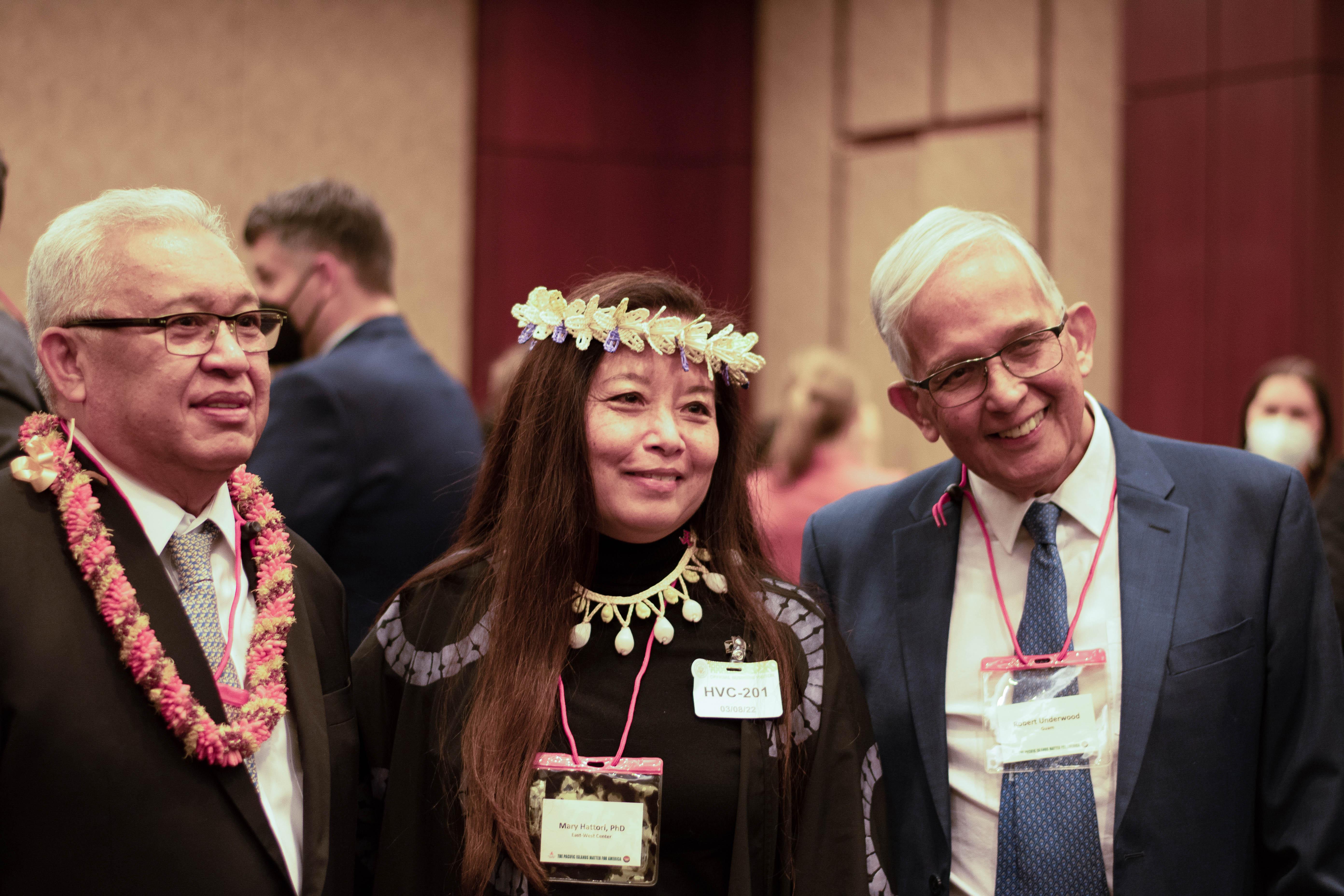
March 8, 2022 Event: The Pacific Islands Matter for America / America Matters for The Pacific Islands Launch
The East-West Center, with the support of the US Department of the Interior’s Office of Insular Affairs and the cooperation of the Pacific Caucus, launched the inaugural edition of The Pacific Islands
March 8, 2022 Event: The Courteous Power: Japan and Southeast Asia in the Indo-Pacific Era
The East-West Center in Washington held a discussion with the University of Michigan's Dr. John Ciorciari, Sophia University's Dr. Shino Watanabe, and Kyushu University's Dr. Nobuhiro Aizawa on topics from Dr. Ciorciari's latest book concerning Japan’s engagement and Southeast Asian responses in the past and present. Read more...
February 14, 2022 Event: North Korea and the Middle East: Lessons Learned for US - North Korea Relations
The East-West Center in Washington, in partnership with the National Committee in North Korea, held a discussion with a panel of experts on lessons that could be learned from US negotiations with Iran regarding its nuclear program and how those lessions could impact the similar negotiations with North Korea. Read more...
February 10, 2022 Event: Coronavirus, China, and the Courting of Southeast Asia
The East-West Center in Washington held a discussion with the S. Rajaratnam School of International Studies' Dr. Benjamin Ho and The Diplomat's Sebastian Strangio on how China's "pandemic diplomacy" has impacted its relationship with countries across Southeast Asia. Read more...
January 12, 2022 Event: Is Democracy Still Relevant to Reduce Secessionist Conflict?
The East-West Center in Washington held a discussion with the University of Toronto's Dr. Jacques Bertrand on his latest book Democracy and Nationalist Struggles in Southeast Asia: From secessionist mobilization to conflict resolution. Read more...
January 11, 2022 Event: Exploring Trilateral Cooperation Possibilities in the Indo-Pacific: US-South Korea-Philippines
The East-West Center in Washington, in partnership with the Korea Foundation, along with EWCW Visiting Scholar Mr. Julio Amador and Dr. Jae Jeok Park from Hankuk University, held the third webinar in the United States-Republic of Korea Cooperation in Southeast Asia: Trade, Investment, and Multilateralism webinar series. Read more...
January 6, 2022 Event: US-ROK Cooperation Can Improve Intellectual Property Protection in Southeast Asia: A Strategic Focus on Online Counterfeiting
The East-West Center in Washington, in partnership with the Korea Foundation, along with EWCW Visiting Scholar Mr. Seth Hayes, Mr. Hyun-suk Lim from the Embassy of the Republic of Korea to the US, and Ms. Toe Su Aung from Elipe Limited, held the second webinar in the United States-Republic of Korea Cooperation in Southeast Asia: Trade, Investment, and Multilateralism webinar series. Read more...
January 5, 2022 Event: Creating Smarter & More Sustainable Cities in Southeast Asia: A Roadmap for United States-South Korea Cooperation
The East-West Center in Washington, in partnership with the Korea Foundation, along with EWCW Visiting Scholar Ms. Sea Young (Sarah) Kim and Ms. Helen Santiago Fink from the US State Department, held the first webinar in the United States-Republic of Korea Cooperation in Southeast Asia: Trade, Investment, and Multilateralism webinar series. Read more...
June 14, 2022 Event: European-DPRK Track II Engagement: Facilitating Dialogue and Diplomacy
The East-West Center in Washington, in partnership with the National Committee on North Korea (NCNK), held the second webinar in a series of webinars on North Korea's relations with European nations with Track2Asia's Mr. Glyn Ford. Read more...
May 25, 2022 Event: Balancing Diplomatic Priorities Across Multiple Interests: North Korea and Europe Relations
The East-West Center in Washington, in partnership with the National Committee on North Korea (NCNK), held the first in a forthcoming series of webinars on North Korea's relations with European nations with Vrije Universiteit Brussel's Dr. Ramon Pacheco Pardo and EUROPEUM's Dr. Tereza Novotná. Read more...
May 24, 2022 Event: Implications of the Planned Ending of Some US Assistance Provided Under the Compacts of Free Association
The East-West Center in Washington, in partnership with the East-West Center's Pacific Islands Development Program (PIDP), held a discussion with members of the Government Accountability Office (GAO) and government officials from the Republic of the Marshall Islands and Federated States of Micronesia on US assistance under the Compacts of Free Association (COFA), the findings of GAO's report on the matter, and the implications as the Compacts near the time of renewal. Read more...
May 18, 2022 Event: Assessing US-ASEAN Relations: The 2022 Special Summit and Beyond
The East-West Center in Washington, in partnership with American University's ASEAN Studies Initiative, held a discussion with US and Southeast Asian experts on the opportunities and work still to be done following the US-ASEAN Special Summit in mid-May 2022. Read more...
The East-West Center in Washington held a discussion with the Stockholm Centre for South Asian and Indo-Pacific Affairs' Dr. Jagannath Panda on what stronger Sino-Russian relations mean for India’s foreign policy, including against the backdrop of the war in Ukraine. Read more...
April 11, 2022 Event: America: A Singapore Perspective
The East-West Center in Washington held a discussion with Singapore's Ministry of Foreign Affairs' Ambassador Tommy Koh and the ISEAS-Yusof Ishak Institute's Mr. Daljit Singh on the status of the US-Singapore relationship and how it navigates geopolitical tensions in the region in their latest edited volume. Read more...
March 16, 2022 Event: US Commitment to Southeast Asia in the Indo-Pacific Shadow: Outlook Under Biden and Beyond
The East-West Center in Washington held a discussion with The Diplomat's Prashanth Parameswaran on how he sees US-Southeast Asia relations under the Biden administration based on the findings from his latest book. Read more...
March 14, 2022 Event: The Street and the Ballot Box: The Bersih Movement, 2018 Election, and the Implications for Malaysian Politics
The East-West Center in Washington held a discussion with the University of Toronto's Dr. Lynette Ong and the University of Michigan's Dr. Dan Slater on topics from Dr. Ong's latest book concerning the evolution of Malaysia's domestic politics. Read more...
March 8, 2022 Event: The Pacific Islands Matter for America / America Matters for The Pacific Islands Launch
The East-West Center, with the support of the US Department of the Interior’s Office of Insular Affairs and the cooperation of the Pacific Caucus, launched the inaugural edition of The Pacific Islands
March 8, 2022 Event: The Courteous Power: Japan and Southeast Asia in the Indo-Pacific Era
The East-West Center in Washington held a discussion with the University of Michigan's Dr. John Ciorciari, Sophia University's Dr. Shino Watanabe, and Kyushu University's Dr. Nobuhiro Aizawa on topics from Dr. Ciorciari's latest book concerning Japan’s engagement and Southeast Asian responses in the past and present. Read more...
February 14, 2022 Event: North Korea and the Middle East: Lessons Learned for US - North Korea Relations
The East-West Center in Washington, in partnership with the National Committee in North Korea, held a discussion with a panel of experts on lessons that could be learned from US negotiations with Iran regarding its nuclear program and how those lessions could impact the similar negotiations with North Korea. Read more...
February 10, 2022 Event: Coronavirus, China, and the Courting of Southeast Asia
The East-West Center in Washington held a discussion with the S. Rajaratnam School of International Studies' Dr. Benjamin Ho and The Diplomat's Sebastian Strangio on how China's "pandemic diplomacy" has impacted its relationship with countries across Southeast Asia. Read more...
January 12, 2022 Event: Is Democracy Still Relevant to Reduce Secessionist Conflict?
The East-West Center in Washington held a discussion with the University of Toronto's Dr. Jacques Bertrand on his latest book Democracy and Nationalist Struggles in Southeast Asia: From secessionist mobilization to conflict resolution. Read more...
January 11, 2022 Event: Exploring Trilateral Cooperation Possibilities in the Indo-Pacific: US-South Korea-Philippines
The East-West Center in Washington, in partnership with the Korea Foundation, along with EWCW Visiting Scholar Mr. Julio Amador and Dr. Jae Jeok Park from Hankuk University, held the third webinar in the United States-Republic of Korea Cooperation in Southeast Asia: Trade, Investment, and Multilateralism webinar series. Read more...
January 6, 2022 Event: US-ROK Cooperation Can Improve Intellectual Property Protection in Southeast Asia: A Strategic Focus on Online Counterfeiting
The East-West Center in Washington, in partnership with the Korea Foundation, along with EWCW Visiting Scholar Mr. Seth Hayes, Mr. Hyun-suk Lim from the Embassy of the Republic of Korea to the US, and Ms. Toe Su Aung from Elipe Limited, held the second webinar in the United States-Republic of Korea Cooperation in Southeast Asia: Trade, Investment, and Multilateralism webinar series. Read more...
January 5, 2022 Event: Creating Smarter & More Sustainable Cities in Southeast Asia: A Roadmap for United States-South Korea Cooperation
The East-West Center in Washington, in partnership with the Korea Foundation, along with EWCW Visiting Scholar Ms. Sea Young (Sarah) Kim and Ms. Helen Santiago Fink from the US State Department, held the first webinar in the United States-Republic of Korea Cooperation in Southeast Asia: Trade, Investment, and Multilateralism webinar series. Read more...